Unity 3D naar de API referentie gids gaan
I found out that in the tutorial the old keyboard shortcut wasn’t working with the newer Visual Studio 2017 that is used with Unity 3D 2017.
at the Unity 3D community I found the correct combinations.
First we have to activate the first part by using : CTRL+ALT+m. After that at the bottom the following message is shown: “Waiting for second key of chord”. The next combination is CTRL+h and off we go to the reference guide!
Fout: Error: User and Group cannot be added in sbconsole after created in WLS Console
Bug 22526026
For this bug, one of our developers found, We installed the patch on our OSB server 12.2.1.0. This made sure that our developer could go on developing his OSB service. We wanted to know if this bug is fixed in the next release of the Oracle SOA Suite 12.2.1.3.0, that was allready released. So I created a simple OSB service, with a lot of hassle as I blogged in this part,
I discovered that Oracle released an Virtualbox with that newer release so I downloaded this one. It was shipped with a complete Desktop and SOA QS 12.2.1.3.0 and the complete server install. This is really cewl, because some of the features are not available on the integrated SOA QS Server. Think about BAM and MFT and other nifty stuff you want to play around with.
So for my test case I found out that after starting the Adminserver and the OSB Server, I also had to start the SOA Server for the OWSM policies.
Recreating the situation
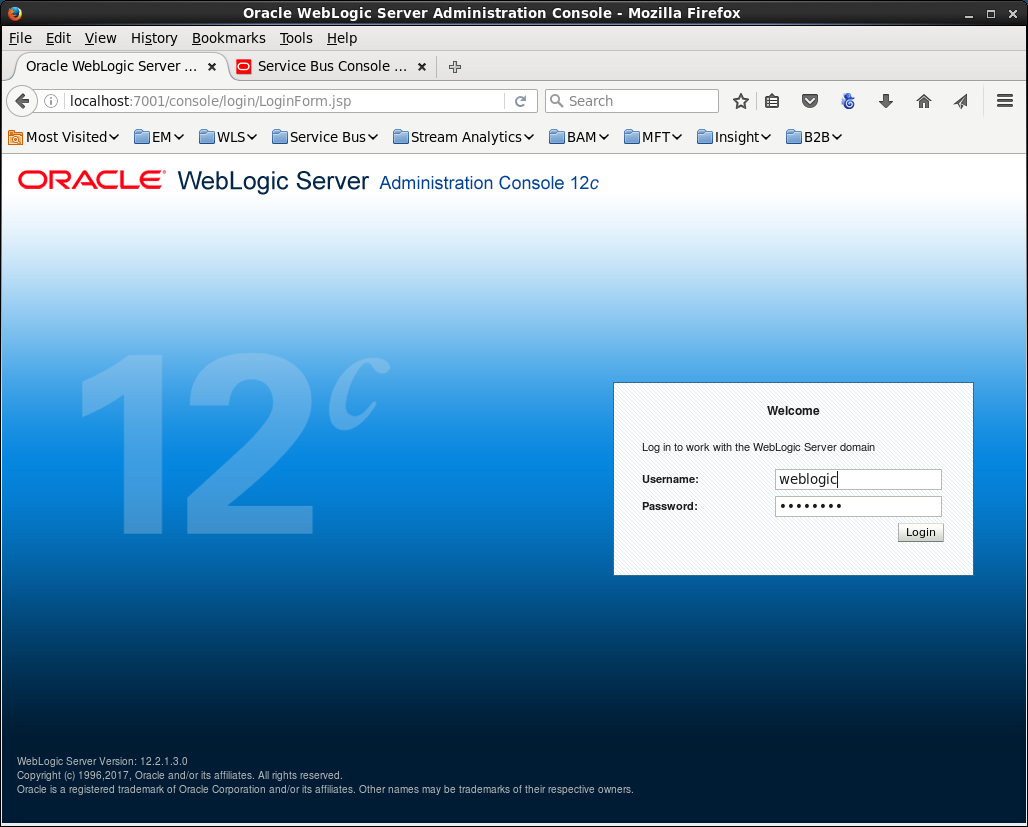
Login at the console
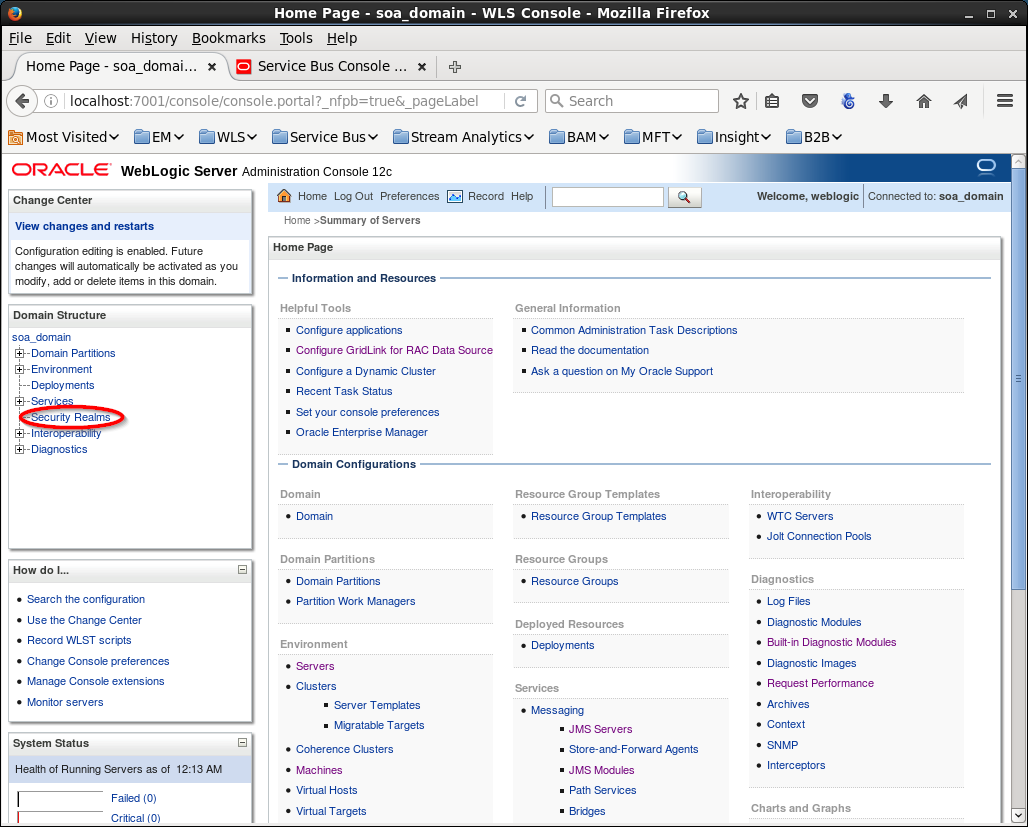
Click on the Security Realms link on the left
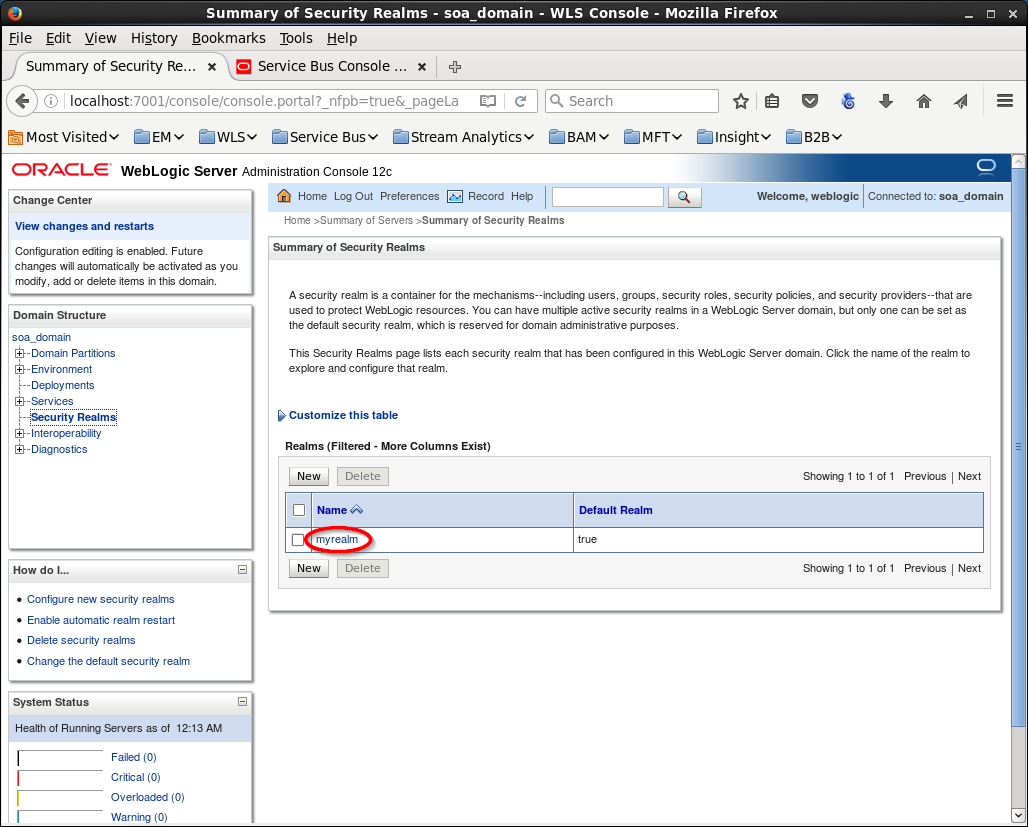
Continue to click on the MyRealm link
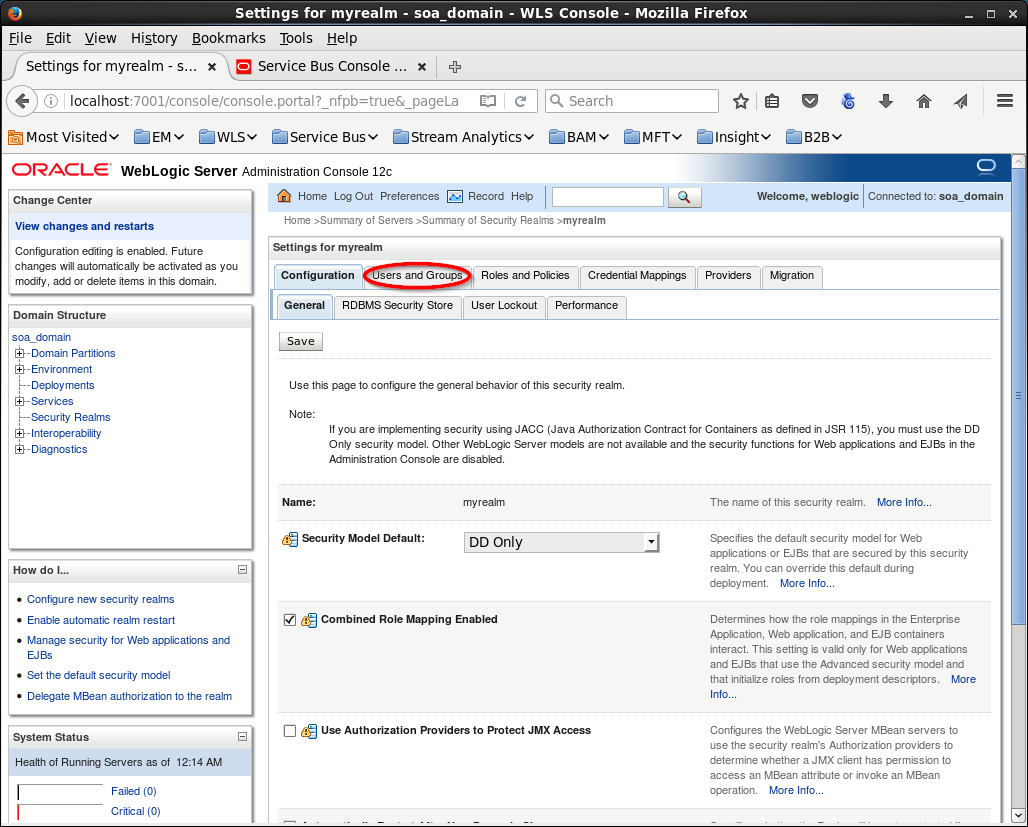
And select the tab “Users and Groups”
Select the tab “Groups” and click on button “New” to go to the Group information screen
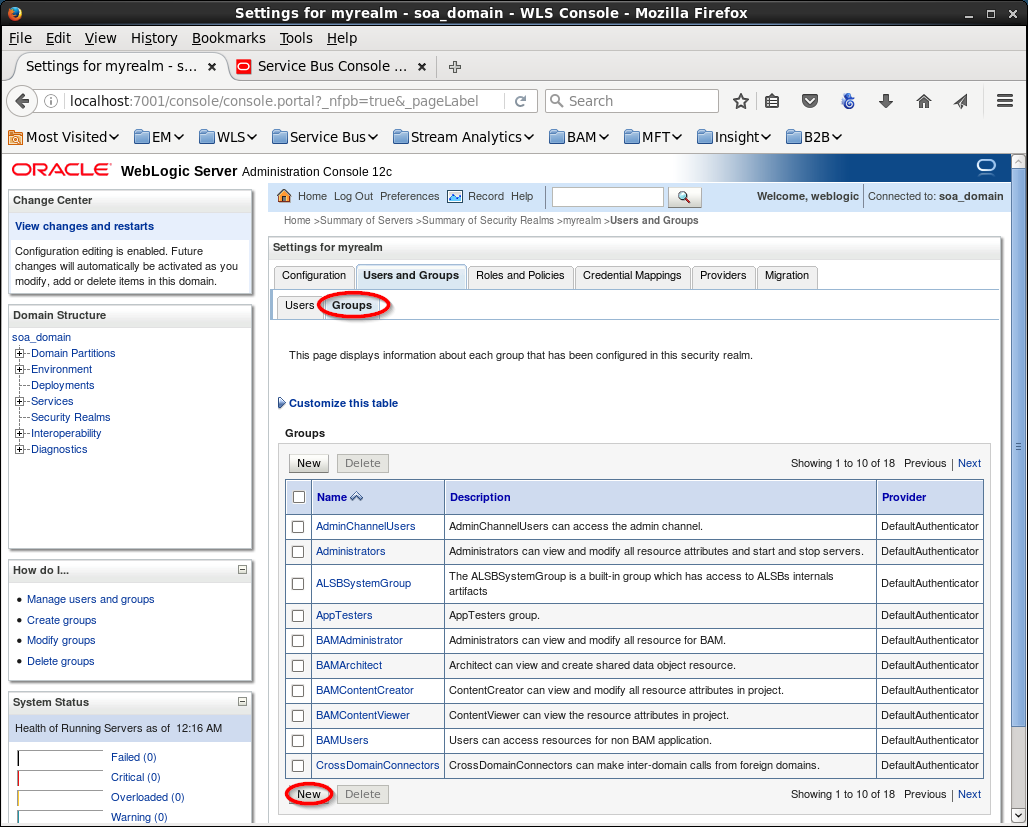
Some information to identity where this group is for and “OK” to create the group:
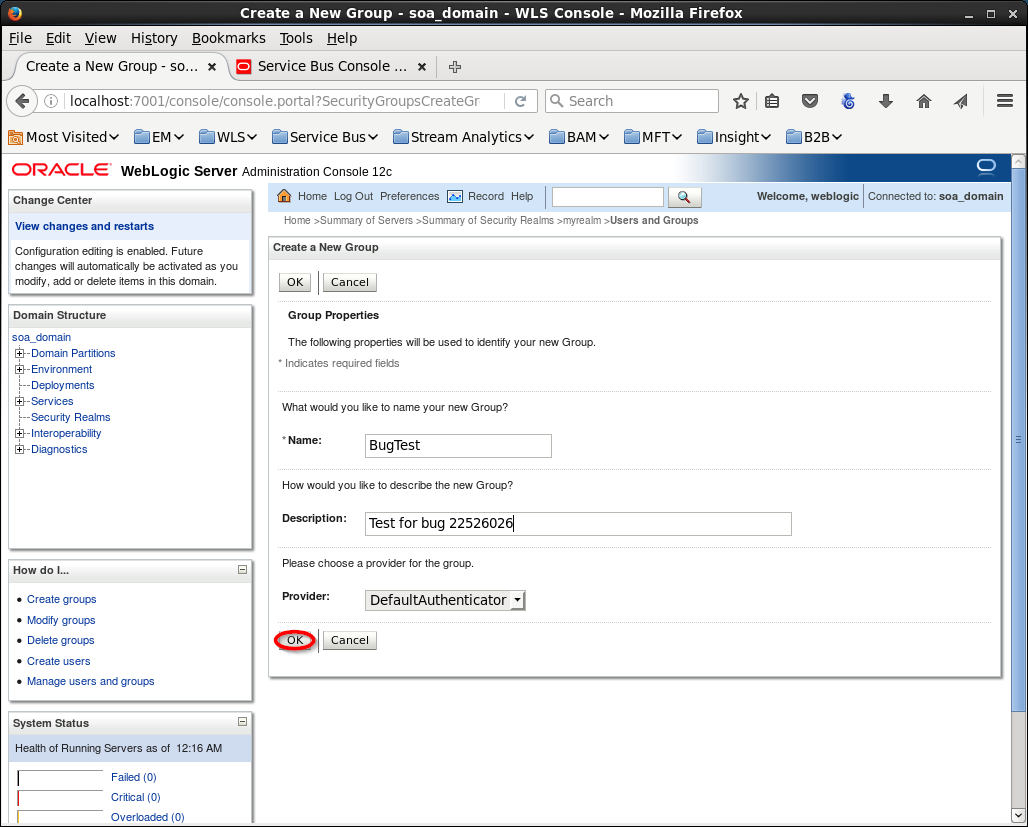
After that select the tab “Users” and click on the “New” button to create a new user:
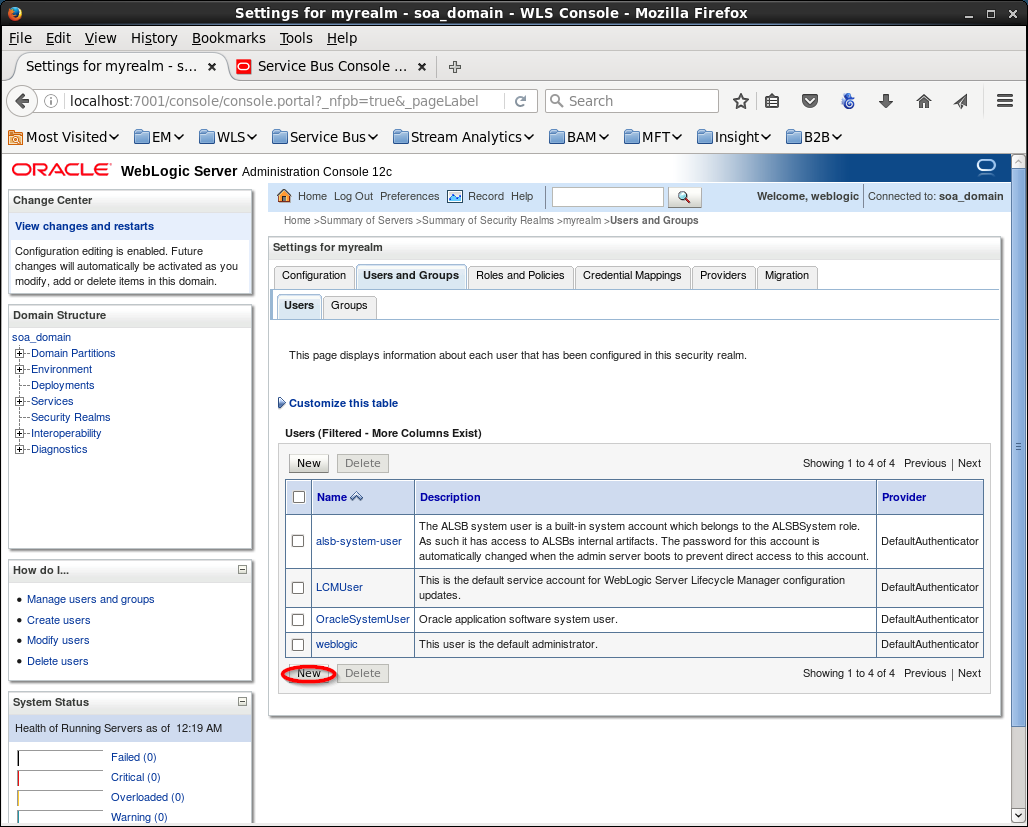
Insert information about this user:
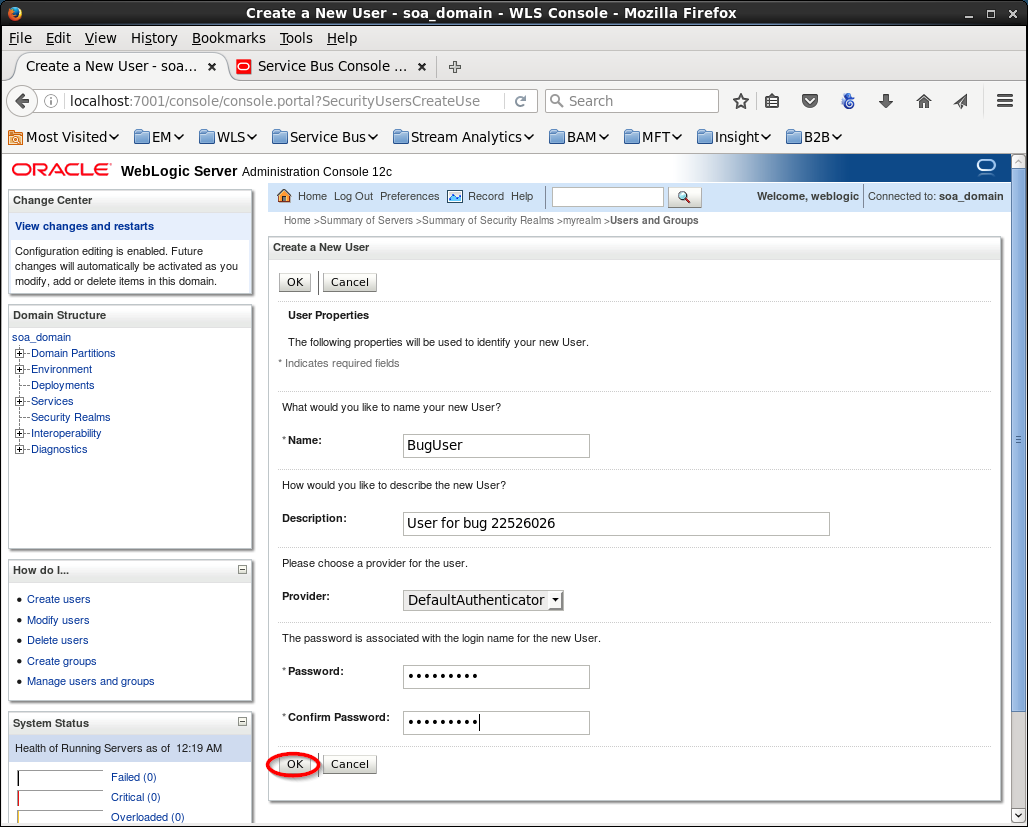
After creating this user we have to make sure that the user is in the BugTest group:
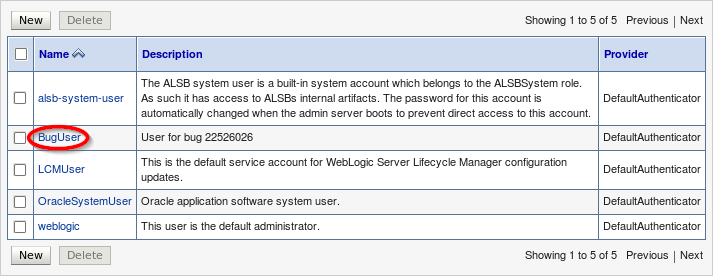
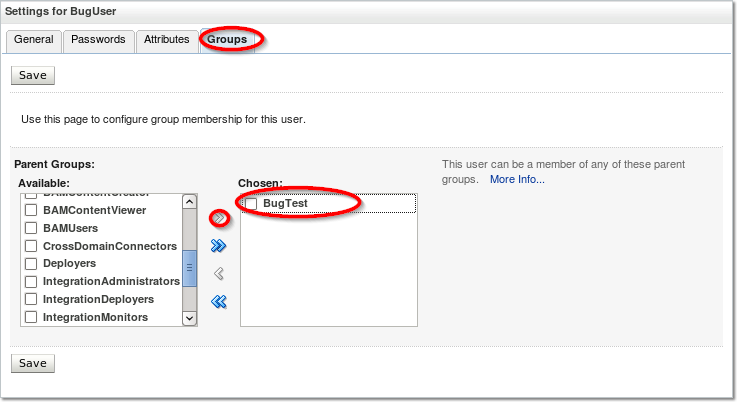
I allready created a simple HelloWorld Service that uses an extra service for the real greeting.
So lets try to add a policy to the Proxy service and after that we add the group to the policy and see if the same error occurs.
To get to this point we have to login at the sbconsole:
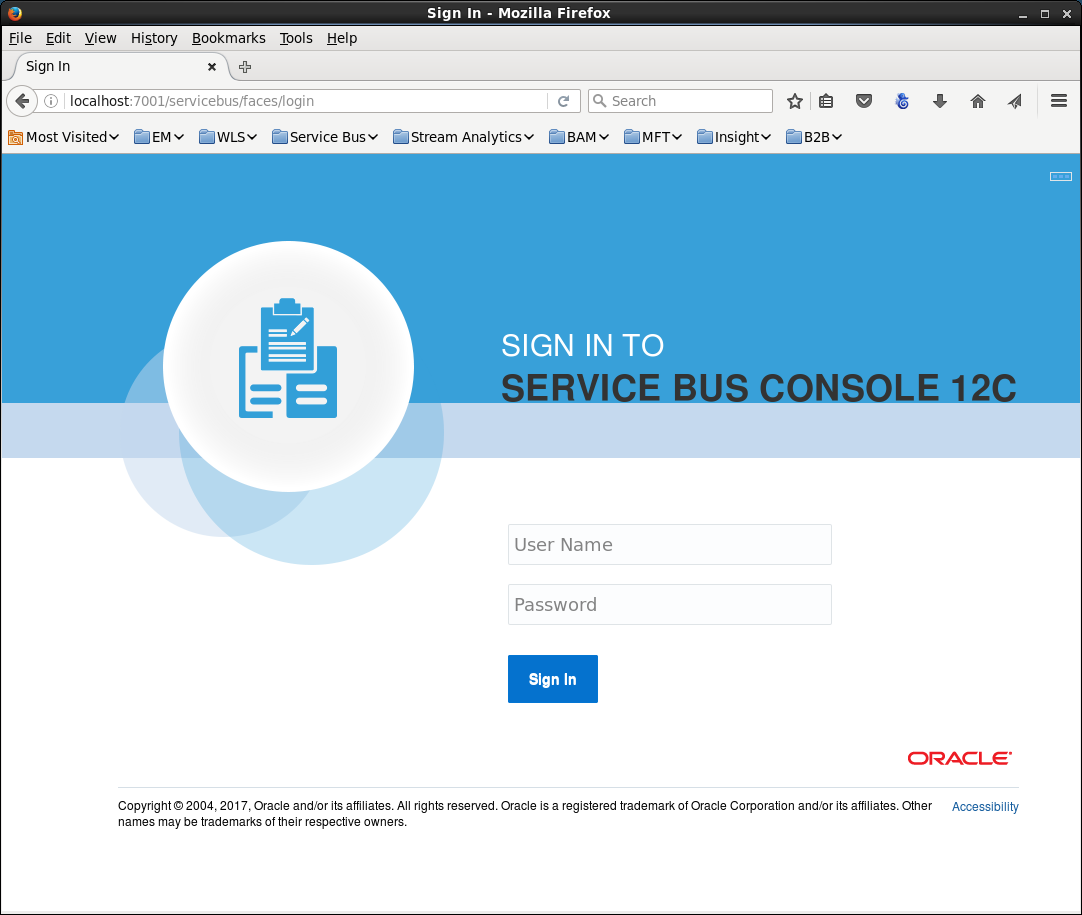
Go to the proxy you would like to add the policy to:
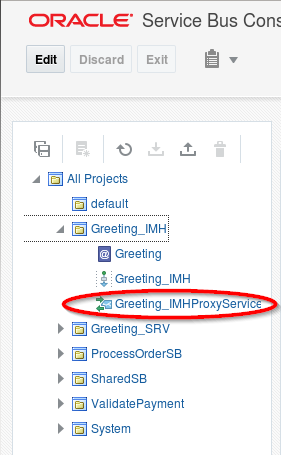
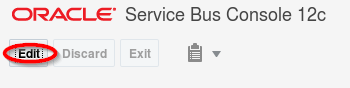
Click on the “Edit” button in the upper left corner:
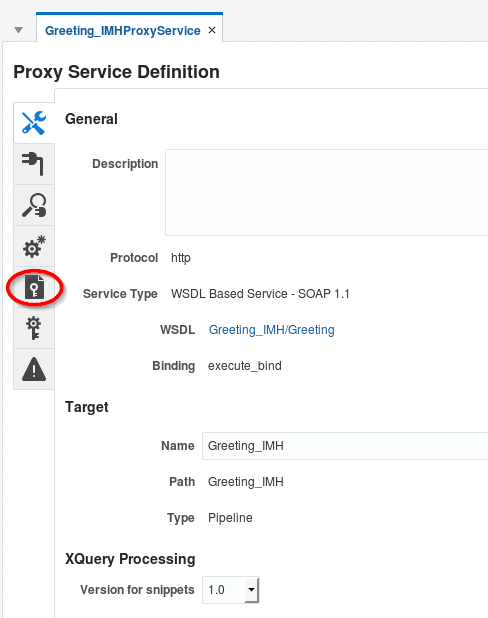
Go to the Policies part:
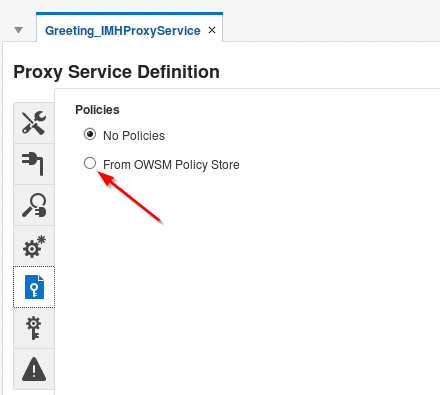
Add the wss username policy by clicking the paperclip:
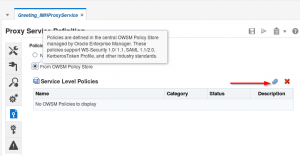
Now you have to search for the desired policy and while selected, click on the attach button:
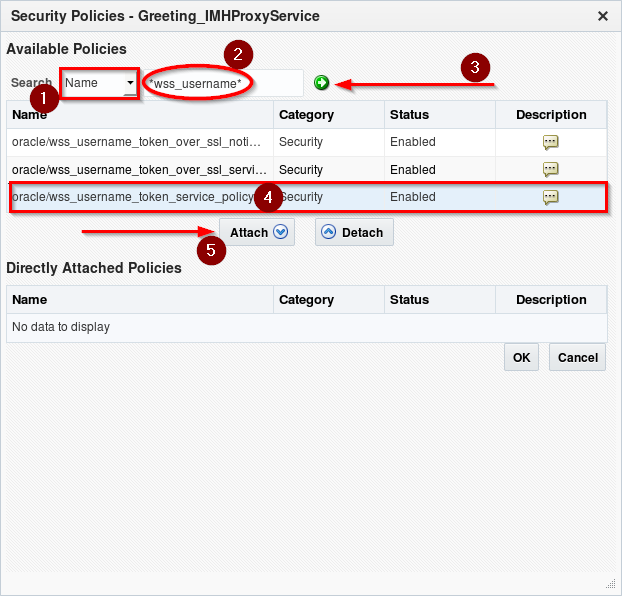
After clicking on OK, you can leave the default override screen and remember to click on the save button:
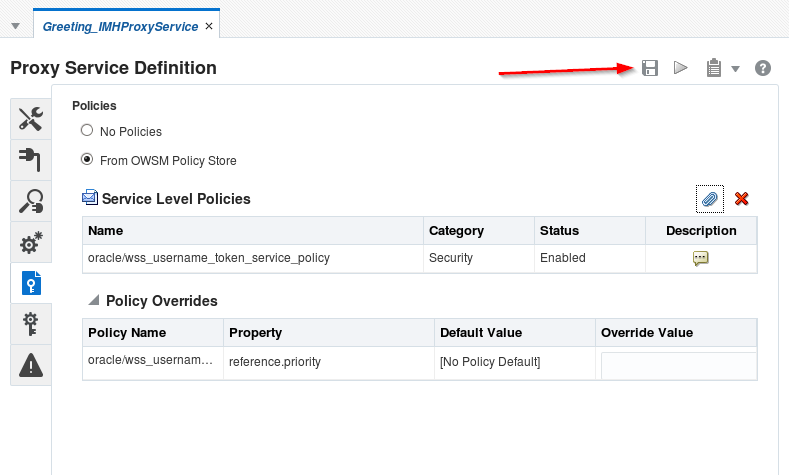
After that we have to add our desired security settings (our bug!):
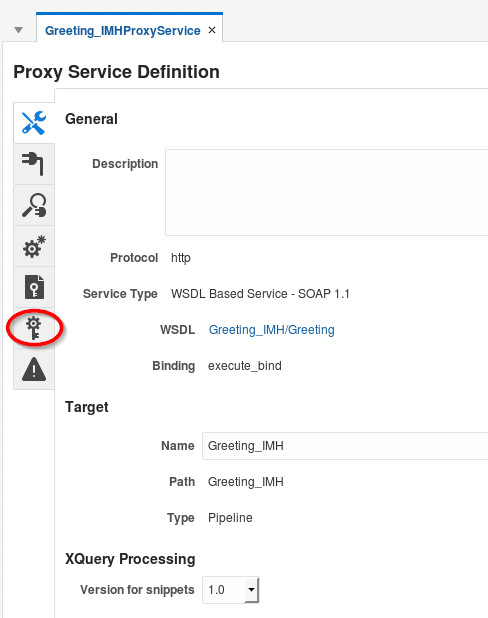
Now in this screen we can add users or groups that have access.
So normally the selected username wss policy grants all weblogic users to call the webservice.
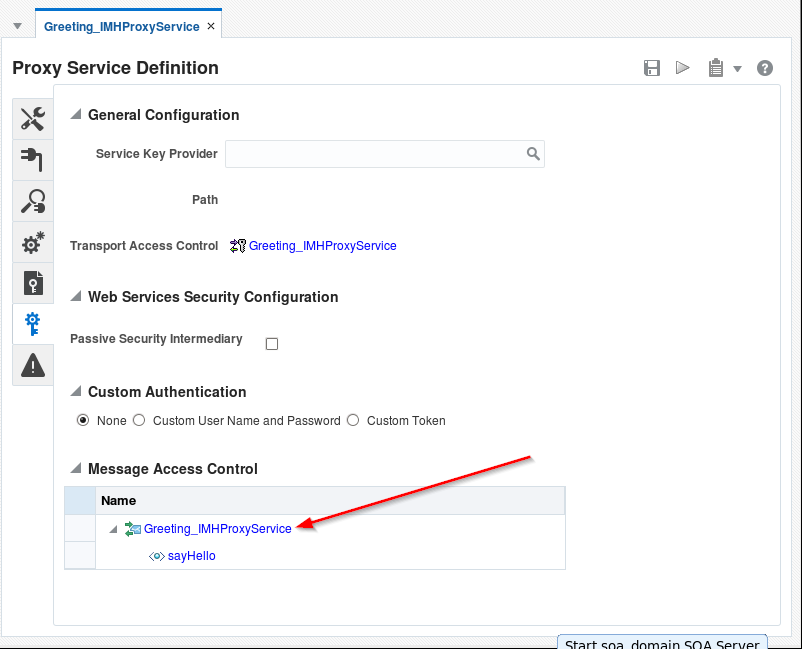
Now we want to override this default and make sure only selected users/groups can call this webservice.
To do this click on the Service name in the Message Access Control part
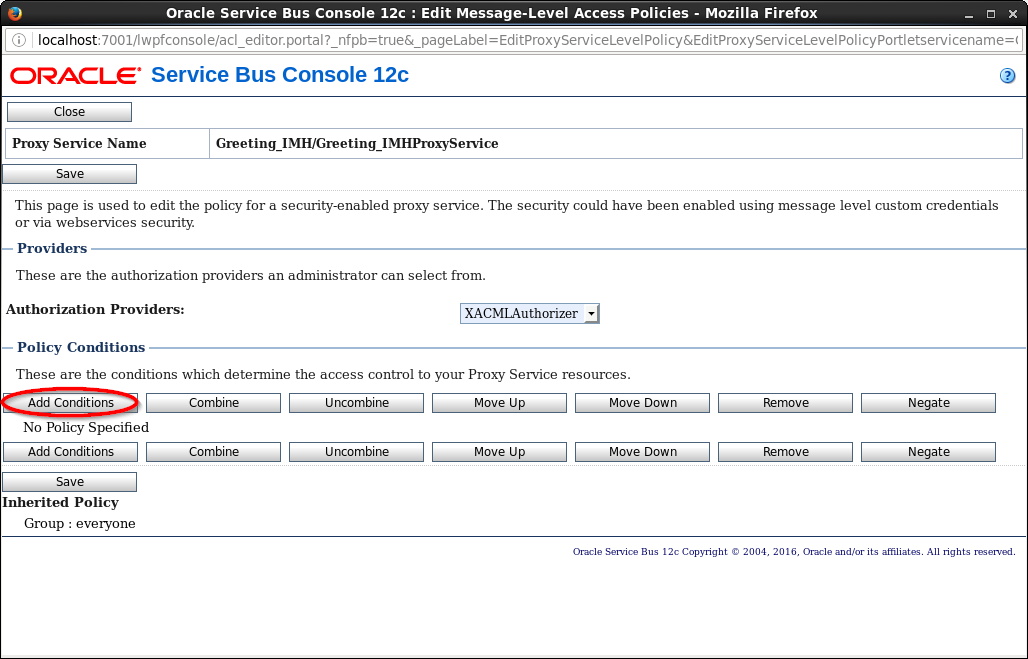
select Groups in the dropdown box and click on Next
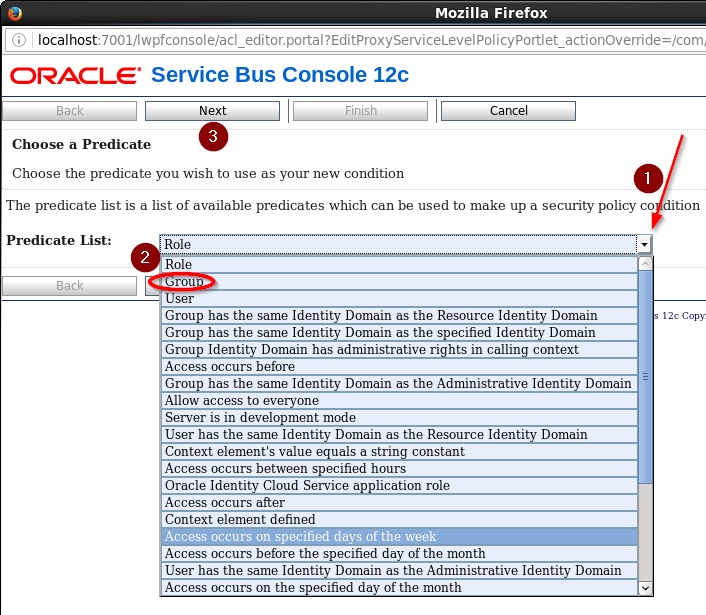
You have to type the Group Name(that’s why you shouldn’t use this policy for autorisation..really!) and make no mistakes. This part will not check if the group or user exists!
So in my example I have to add the Group: BugTest.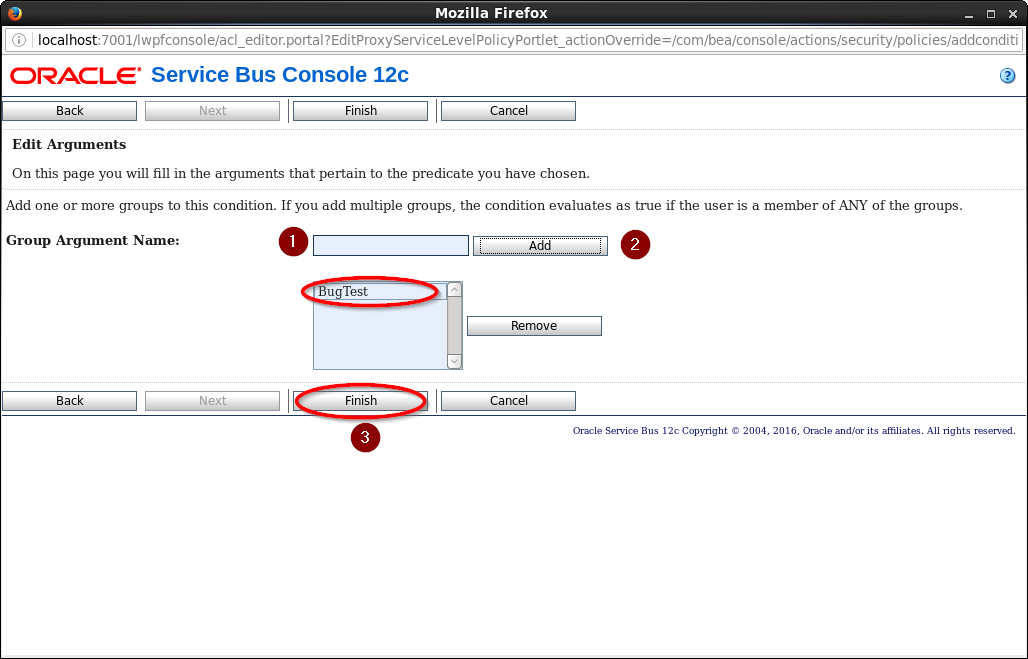
and Oh My, there is a bug:
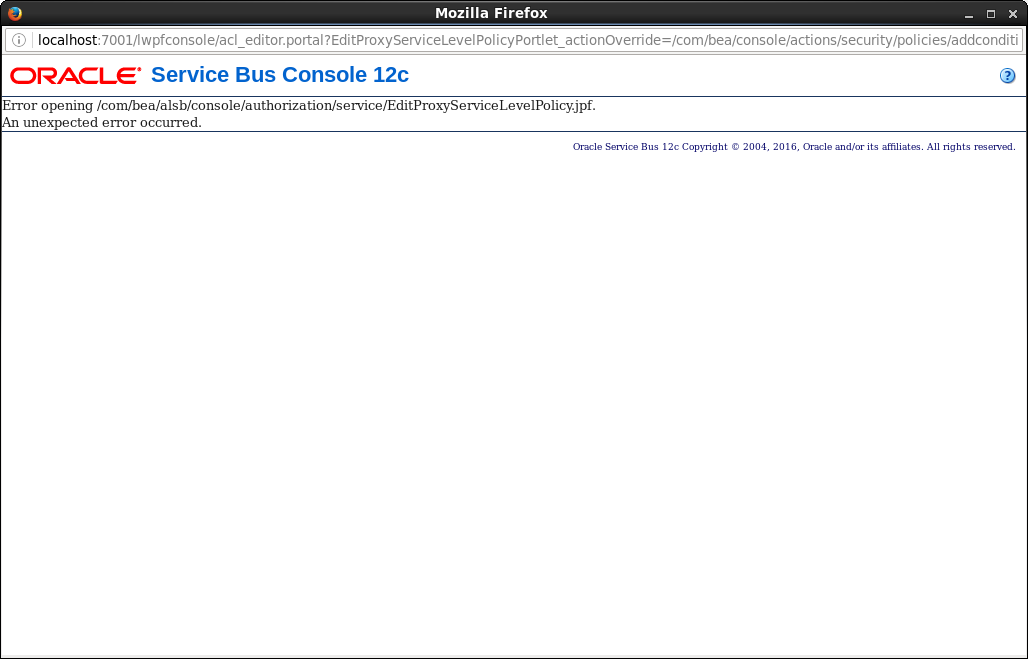
Patch 22526026
So lets get patching. Reading the readme.txt and I saw some stuff that was different on my install: the $ORACLE_HOME is pointing to a DB install directory and not my FMW. Using a different Java Location, because there was no JDK/JRE installed in my FMW home. The default: /usr/java/default is used for this installation.
So altered my ORACLE_HOME into:
export ORACLE_HOME=/u01/app/oracle/fmw/12.2
so lets check the OPatch lsinventory:
$ opatch lsinventory
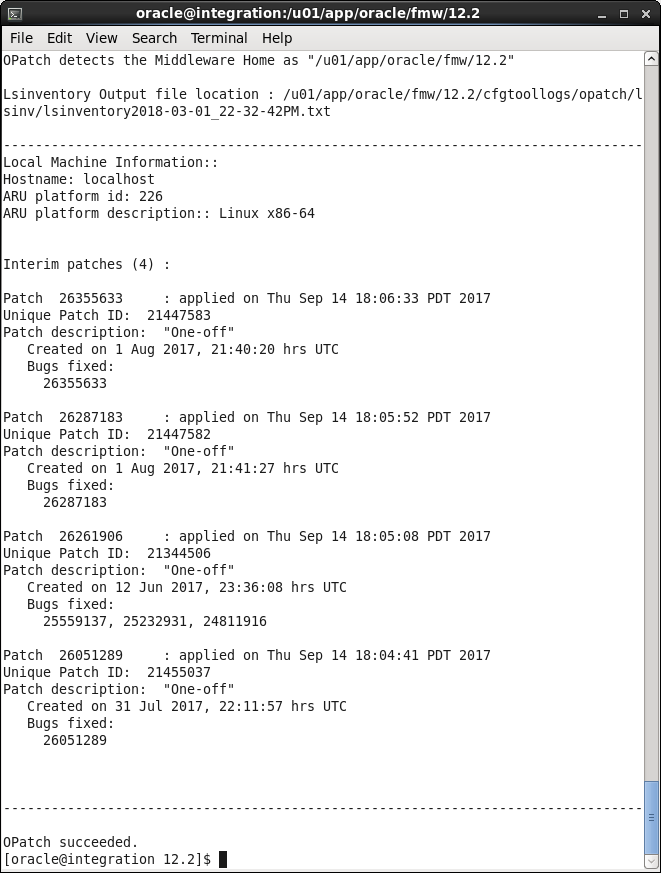
Now I know that this could lead to some problems, because there are a couple of One-off patches installed:
26355633
26287183
26261906
26051289
So lets try and install our patch. I didn’t stop my servers, just to see if this can work. It states in the Readme that it is a rolling patch. It will not work if you don’t have a FMW_ROLLING_ORACLE_HOME.
For more information, consult the My Oracle Support MOS Note: 1942159.1
opatch version number is:
13.9
go to the directory where the opatch is and apply opatch:
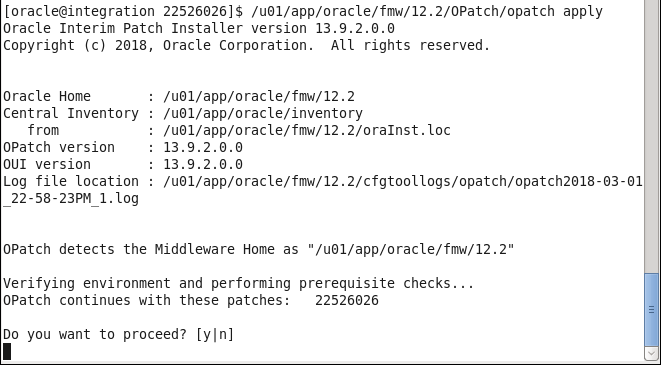
The installer indeed states that the servers should be stopped.
OSB kennis
a little is not enough
My experience in the SOA world has always been on the right side ;-). The BPEL side, that is! A little inside joke my colleague and I always have.
But to be honest, all the OSB questions are redirected to him and most of the BPEL ones to me. As we are upgrading our integration stack we have come across some bugs and problems with the versions we want to use (that is Oracle SOA Suite 12.2.1.0). The bugs we discovered in short are:
- Patch 22526026. User and Group cannot be added in sbconsole after created in WLS Console.
- CSF Key on Business Service does not override the default value
As always there is a big chance that Oracle tells us to upgrade, that why we wanted to check if this is still a problem.
So for the first bug-check I wanted to create a simple process:
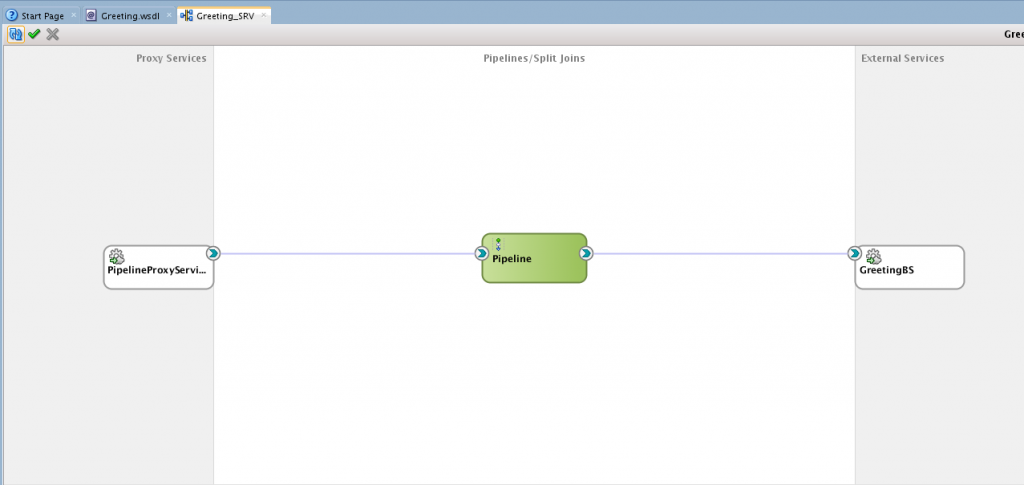
HelloWorld OSB service that calls an other OSB service that does the actual replying with Hello 🙂 … and I struggled with this one. Oh my! How the lack of knowledge showed!
I tried to get a simple assign working and this caused me to try a lot of things in the weekend and evenings 🙁
There are so many tutorials online and I am posting mine, because I could not get it right, using those blogs. Even the ones I choose because the authors should know what they are talking about. So if a blog states that you should assign a value to the $body then I will oblige. After doing so I encountered a lot of errors, but so happy to see I am not the only one:
value must be an instance of {http://schemas.xmlsoap.org/soap/envelope/}body
How irritating it was to get stuck with the same error, even after trying all the blog solutions. Yesterday I asked my colleague and he looked at me with question-marks in his eyes. So if he was trying not to say: “What the f*ck are you doing and why are you doing that” … That made me show the tutorials and he told me that for using the $body I could not use an Assign action, because this is an existing variable. So create a new one to use, or instead of using an Assign action, use a Replace action.
And it worked. Really? I feel humble once again.